Refurbishment
Mill Hill, Acton, London, UK
Project Brief
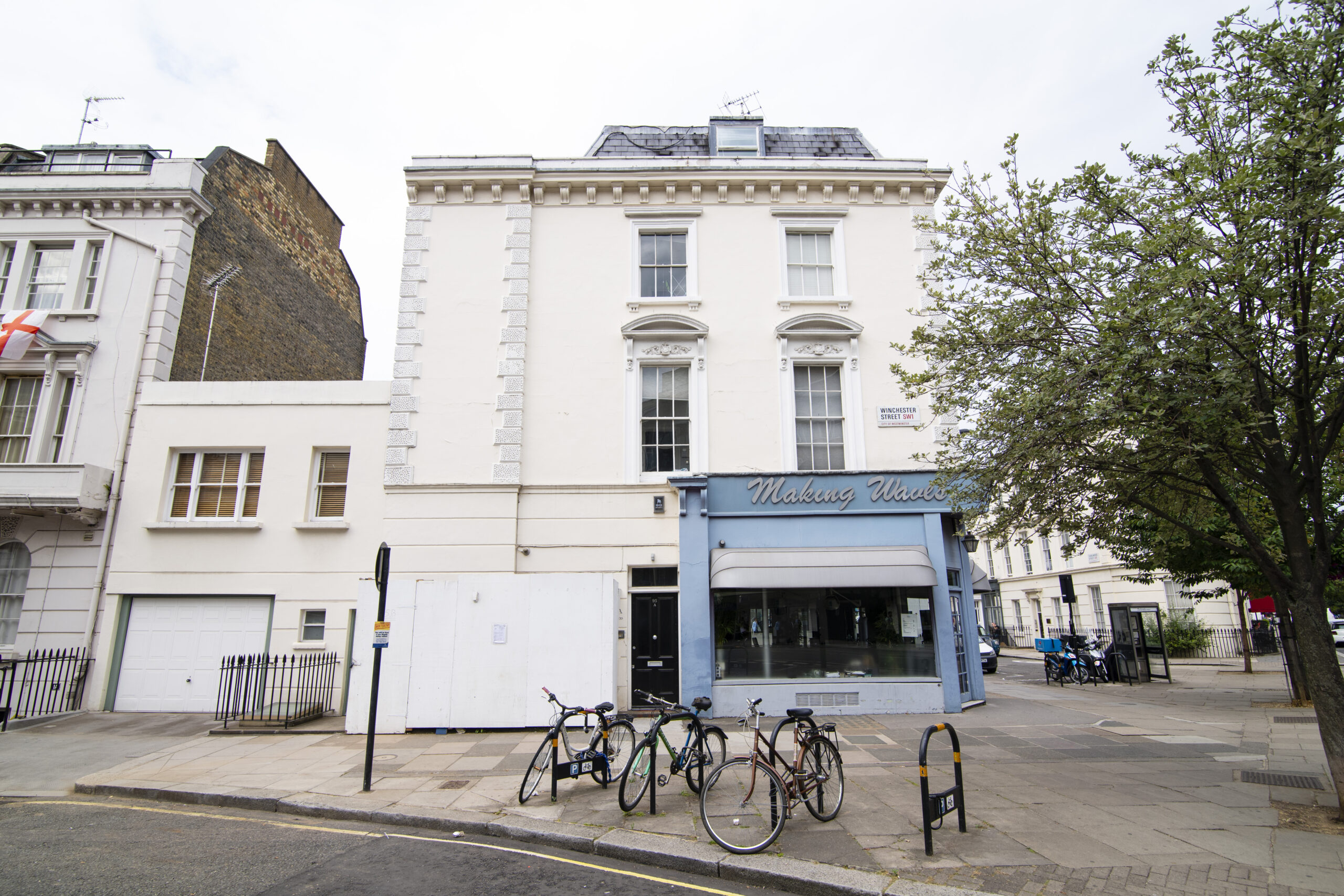
LSY Engineering Consultants Ltd was appointed as Lead Structural Engineer for the refurbishment and extension of an existing two-storey property in West London.
The project involved a comprehensive programme of structural alterations designed to transform the internal layout while retaining the character of the existing building. Our appointment covered the project from tender stage through to construction, including structural design, site supervision, and ongoing support throughout the build process.
The scope of works included:
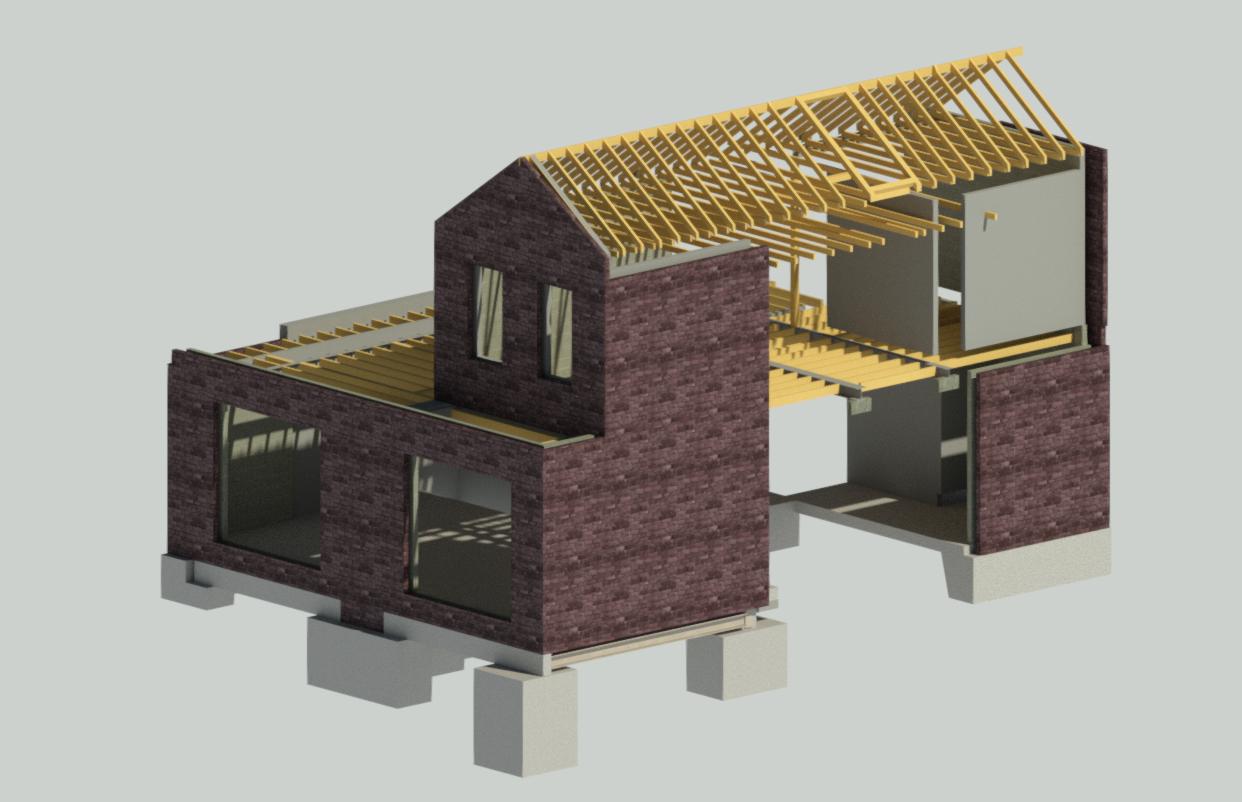
- Design of foundations for the proposed extension.
- Formation of new open-plan living spaces.
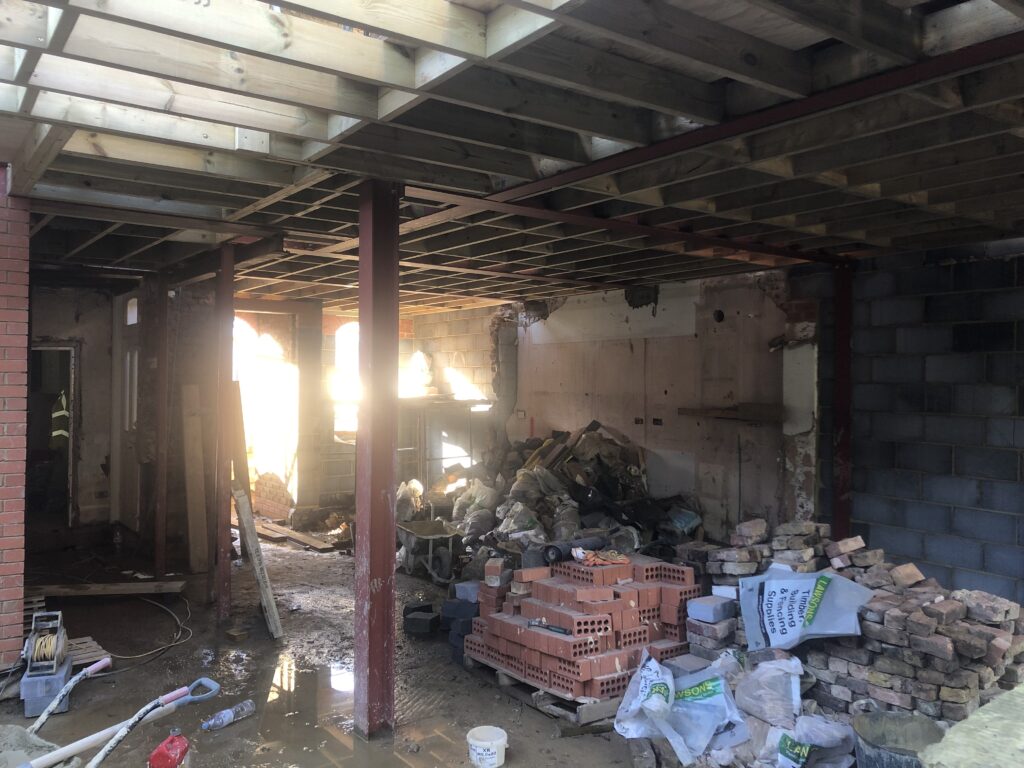
- Installation of structural steel frames.
- Rear extension to the existing property.
- Removal of multiple internal walls.
- Structural works associated with the revised architectural layout.
The property was located within a conservation area, requiring a sympathetic approach that balanced modern structural requirements with the preservation of the building’s original character.
Challenges
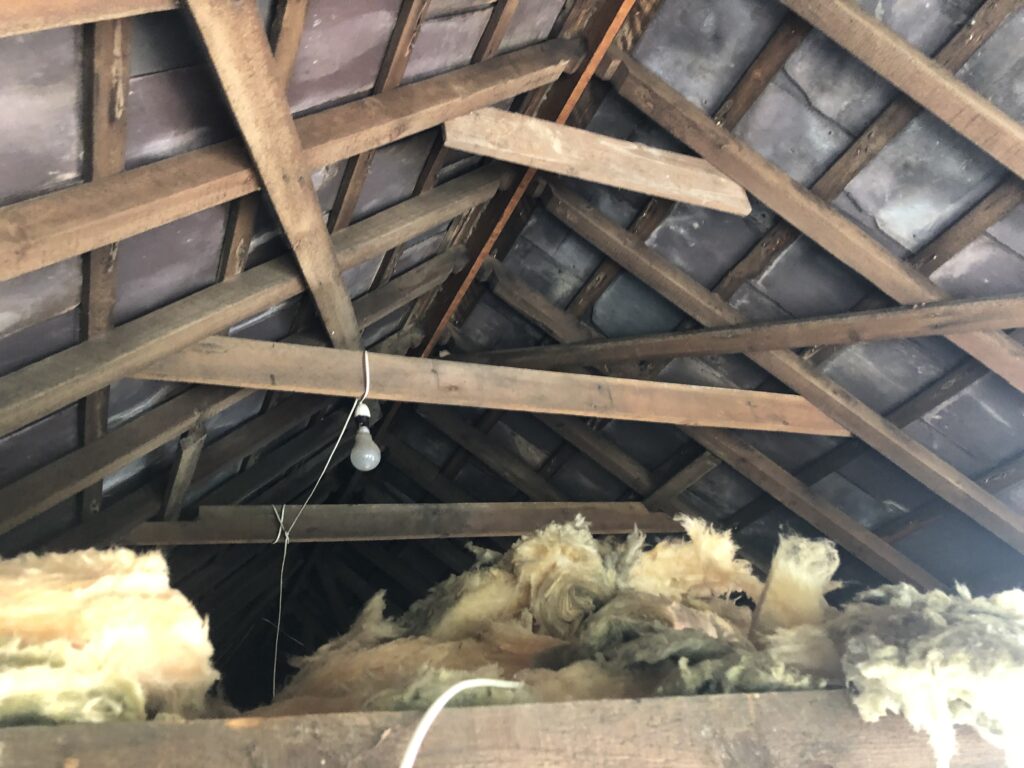
The principal challenge was the uncertainty surrounding the existing structure. Due to the age of the property, the residual strength and condition of many structural elements could not be confirmed from available information alone.
The site was also affected by mature trees located adjacent to the proposed rear extension. Their presence introduced additional geotechnical and foundation design considerations, requiring careful assessment to mitigate the risk of ground movement and future structural damage.
Before the structural design could be finalised, several site investigations were required, including:
- Arboricultural surveys.
- Ground investigation surveys.
- Trial hole investigations.
- Structural opening-up works.
These investigations were essential to establish the existing structural arrangement, confirm foundation requirements, and ensure compliance with local authority and conservation area constraints.
Process
LSY commenced the project with a programme of targeted opening-up works and trial hole investigations to verify the existing structural layout. The surveys confirmed that several key design assumptions regarding floor spans, load paths, and masonry wall construction were correct. This early verification provided confidence in the proposed structural strategy and reduced the risk of unexpected issues arising during construction.
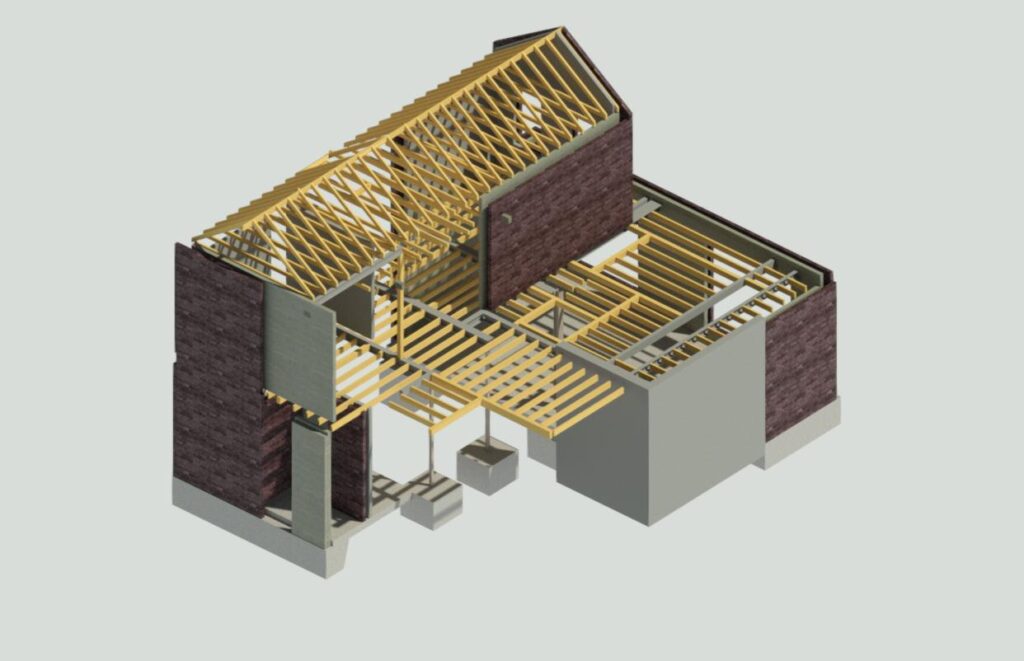
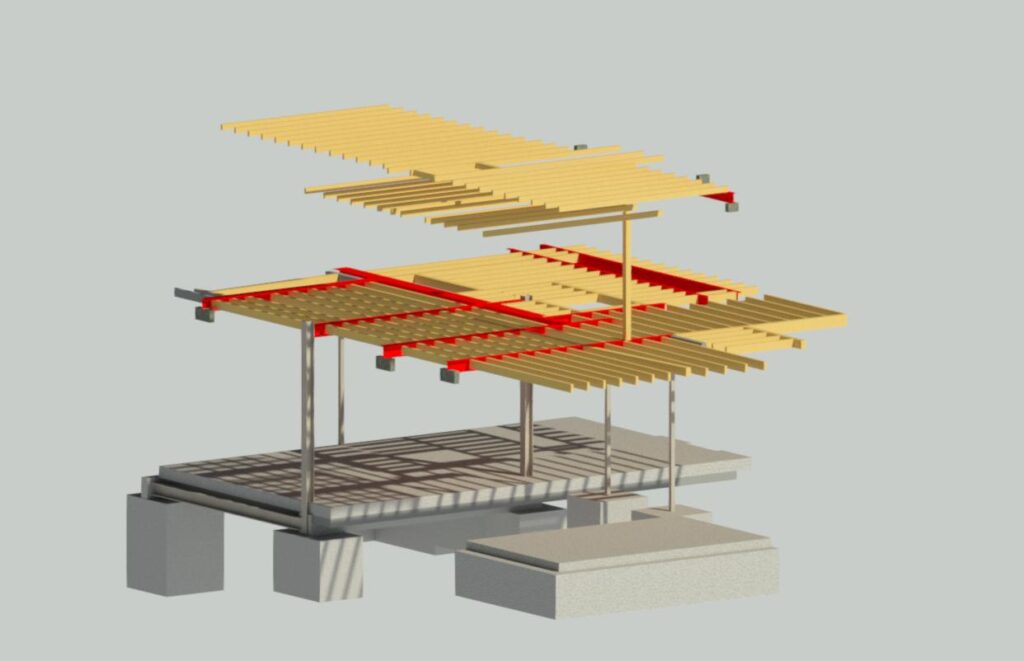
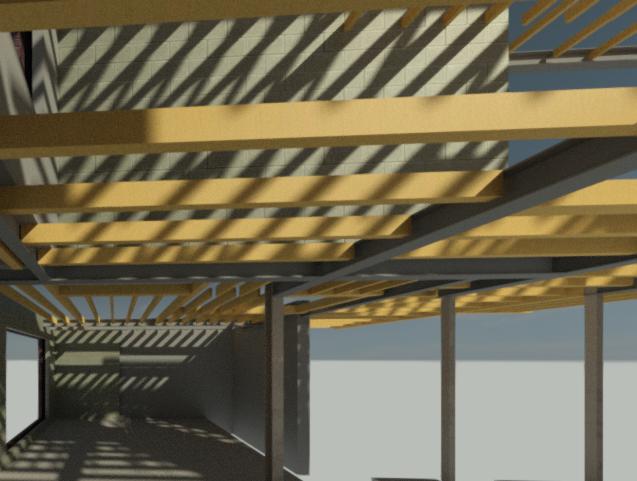
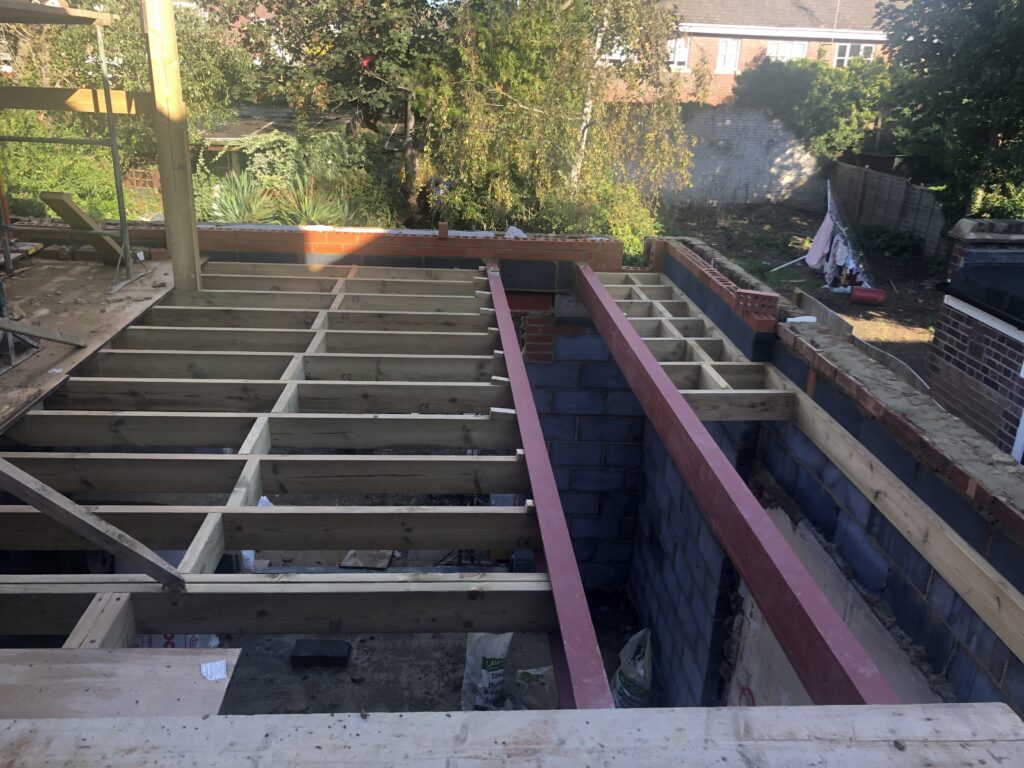
To facilitate the new architectural layout, LSY designed and coordinated the installation of 15no. structural steel members, including a major steel box frame designed to resist both vertical and lateral loading.
A series of 203 UKB steel beams were adopted throughout the scheme to support the new openings and rear extension. Aligning the beam depths with the new floor joists provided several benefits:
- Consistent connection detailing.
- Improved coordination between structural elements.
- Level soffits throughout the project.
- Simplified construction.
The geotechnical and arboricultural investigations identified two viable foundation solutions:
- Piled foundations.
- Traditional foundations extending approximately 2.0m below ground level.
Following discussions with the contractor and consideration of programme constraints, lead-in times, and construction costs, deep traditional foundations were selected as the preferred solution. This approach enabled the project to proceed efficiently while satisfying the recommendations of the ground investigation and arboricultural assessments.
Throughout construction, LSY provided regular site inspections and technical support, working closely with the contractor and design team to ensure the structural works were delivered in accordance with the design intent.
Outcome
The project was successfully completed, delivering a modern and highly functional family home while preserving the distinctive character of the original building and its conservation area setting.
The structural alterations enabled the architect’s vision to be realised, creating significantly larger and more open internal spaces while maintaining many of the property’s original features.
By combining carefully considered structural interventions with practical construction solutions, the project achieved a substantial enhancement in both usability and property value.
The extension and remodelling works transformed the internal layout, providing a bright, open-plan living environment that better suited the client’s requirements while respecting the historic character of the building.
Back to all projects