Temporary Works
Salmon Lane, London, UK
Project Brief
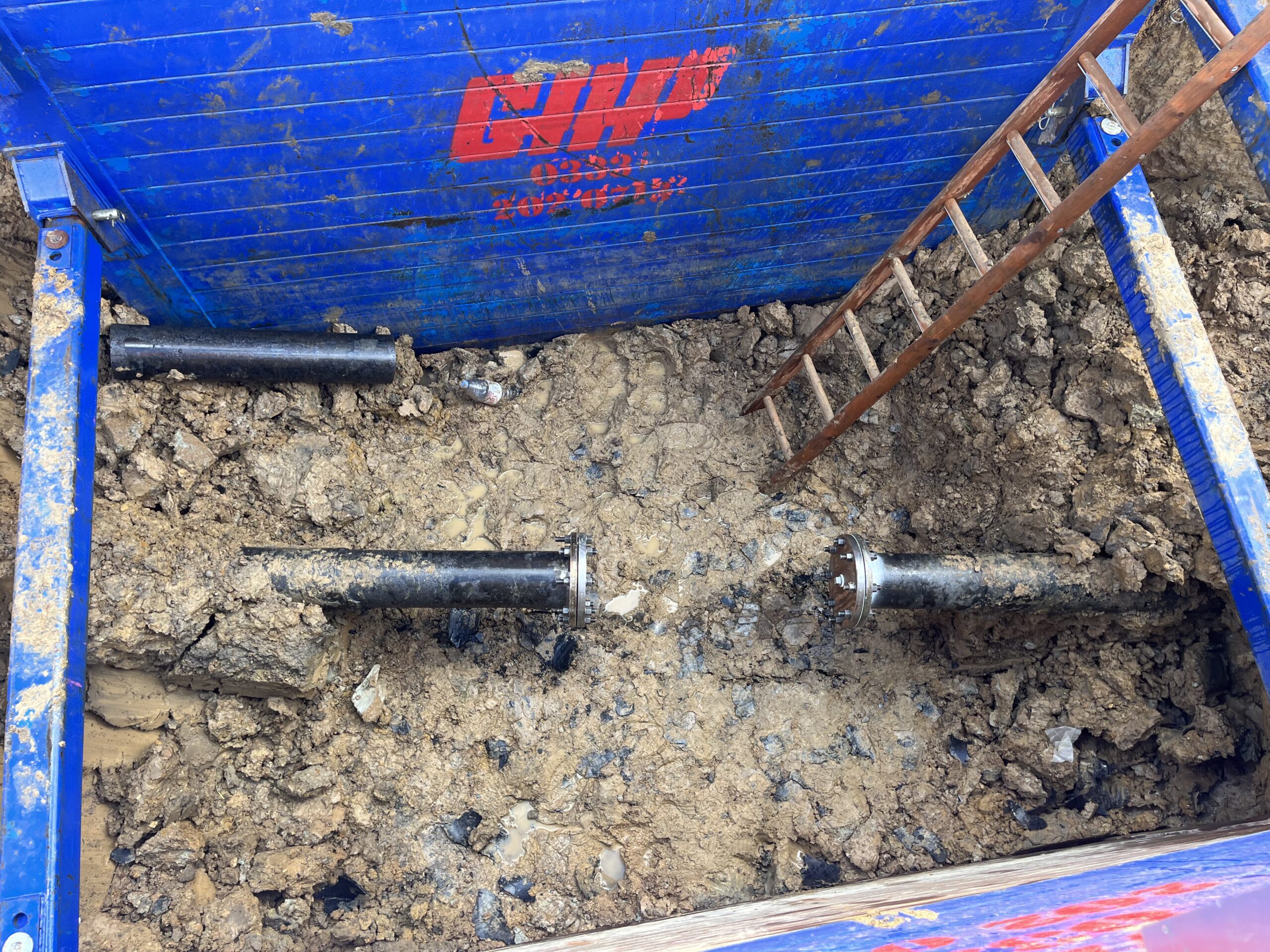
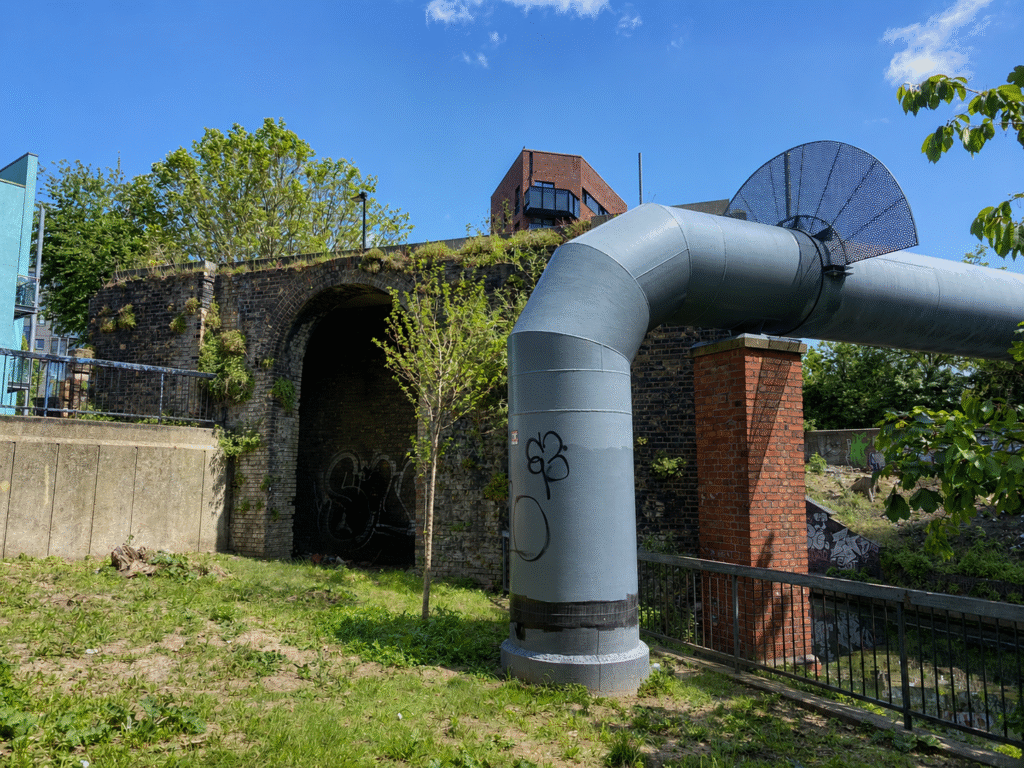
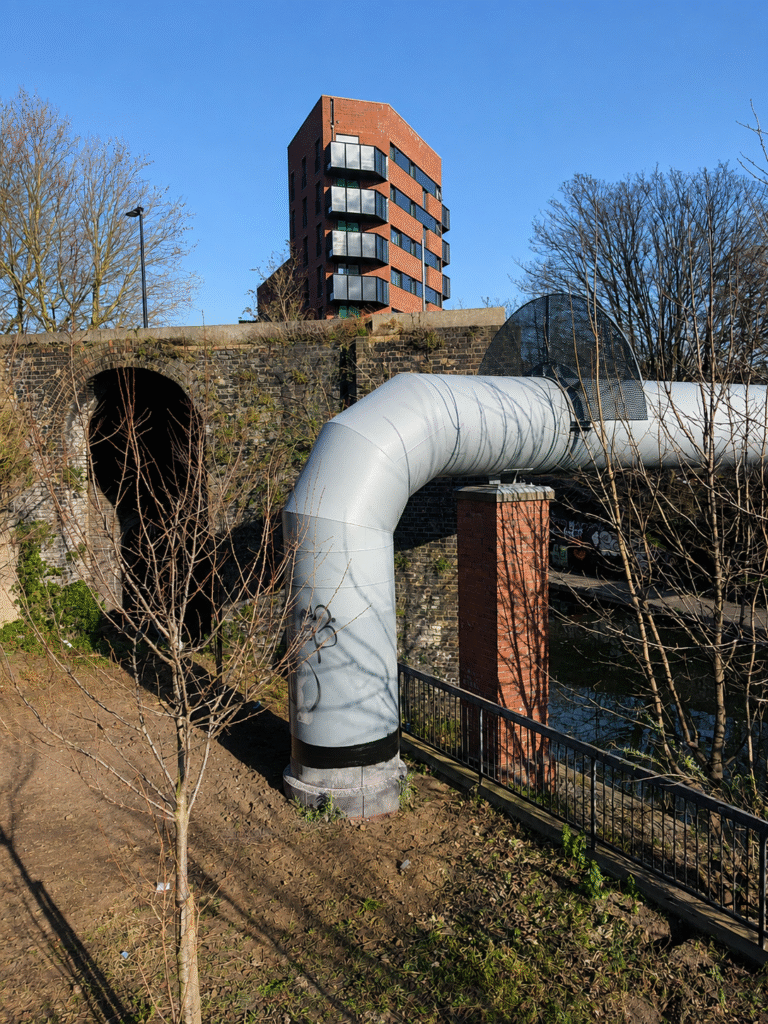
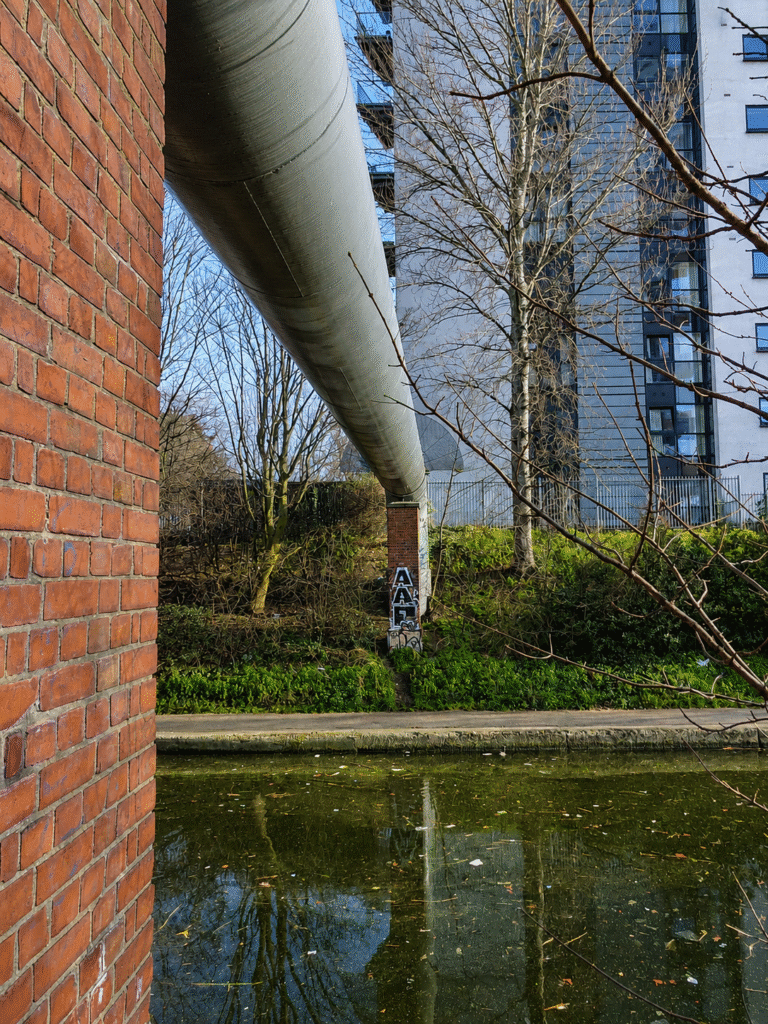
LSY Engineering Consultants Ltd was appointed by Cadent Gas Ltd to provide structural engineering services for the replacement of a 48-inch diameter steel gas main spanning Regent’s Canal in London.
The existing gas main, supported on masonry piers, required replacement following the identification of a cracked weld. Our appointment included undertaking an initial structural survey, assessing the existing support infrastructure, and providing structural design input for the proposed replacement arrangement.
The scope of services covered the assessment of the existing masonry piers, anchor blocks, and supporting structures, together with the design of remedial strengthening measures and structural appraisals for the revised loading conditions. Throughout the project, LSY worked closely with pipe stressing engineers, mechanical engineers, surveyors, and the principal contractor to ensure the successful delivery of the scheme.
Challenges
The project involved the replacement of a critical section of gas infrastructure spanning approximately 25m across Regent’s Canal within a densely developed urban environment.
The location presented several logistical and engineering challenges, including the proximity of a live highway, pedestrian routes, and numerous existing underground utilities. In addition, the project programme was constrained by permit requirements, traffic management restrictions, and planned road closures, making early coordination and efficient design development essential.
To support the design process, LSY undertook comprehensive utility scanning and site surveys to establish the location of existing services and provide accurate dimensional information. The detailed survey information also proved invaluable for both the structural design calculations and the temporary works scaffolding design required to facilitate the replacement works.
A further challenge related to the unknown construction of the existing support piers. Limited historical records were available, making early intrusive investigations critical to understanding the structural arrangement and assessing the capacity of the existing support structures. Through opening-up works and targeted investigations, it was established that the piers comprised a masonry outer leaf surrounding an internal reinforced concrete column measuring approximately 580mm x 580mm.
Process
LSY commenced the project with a detailed structural condition survey of the existing gas main support structures. The survey identified areas of cracking within the masonry piers, including vertical cracking at lower levels. Following assessment, the existing support piers were deemed capable of continuing to support the current vertical loading; however, remedial strengthening measures were recommended to arrest further deterioration and enhance long-term durability.
To address the masonry cracking, LSY developed a steel strap-banding solution utilising 125 x 65 Parallel Flange Channel (PFC) sections installed around the lower portions of the affected piers. This arrangement provided additional confinement to the masonry and improved the structural performance of the cracked areas.
As the design progressed, loading information from the pipe stressing engineers was incorporated into the structural assessment process. This data included the revised vertical loads, bending moments, and restraint forces generated by the replacement gas main and associated support arrangements.
Using this information, LSY undertook detailed structural calculations to verify the capacity of the existing reinforced concrete columns and masonry piers under the proposed loading regime. The analysis confirmed that the existing structures possessed sufficient capacity to safely accommodate the new loading conditions associated with the replacement pipeline.
In parallel, LSY developed a concept design for a new anchor block arrangement to provide an alternative support solution if required. The proposed concept comprised a reinforced concrete anchor block approximately:
- 2.0m wide
- 3.0m long
- 2.0m deep
The concept design was developed to accommodate the forces identified within the pipe stressing analysis and provide Cadent with additional flexibility in determining the final support arrangement. Although this option was subsequently not progressed by the client, it demonstrated the viability of alternative solutions and informed decision-making during the design process.
Throughout the project, LSY coordinated closely with the wider project team, including pipe stressing specialists, mechanical engineers, surveyors, and contractors, ensuring that all structural considerations were fully integrated into the overall design.
All calculations, drawings, design risk assessments, and supporting documentation were prepared in accordance with the Cadent G17 approval process, enabling efficient review and approval without delay to the programme.
Outcome
The project was successfully delivered in accordance with Cadent’s programme requirements, enabling the replacement of a critical section of gas infrastructure while maintaining the integrity of the existing support structures.
The structural assessments confirmed that the existing reinforced concrete support piers were capable of accommodating the revised loading conditions, avoiding the need for costly replacement works and providing significant value to the client.
The remedial strengthening measures were implemented effectively, improving the condition and resilience of the existing masonry piers while ensuring the safe operation of the new gas main.
The successful completion of the project reinforced LSY’s relationship with Cadent Gas Ltd and led to further commissions involving pipeline supports, bridge structures, temporary works, and utility infrastructure across the UK.
Back to all projects